Tracing how state policy updates reshape signup incentives for smartphone poker variants alongside verification timelines
Hugo Frank · Aug 22, 2026
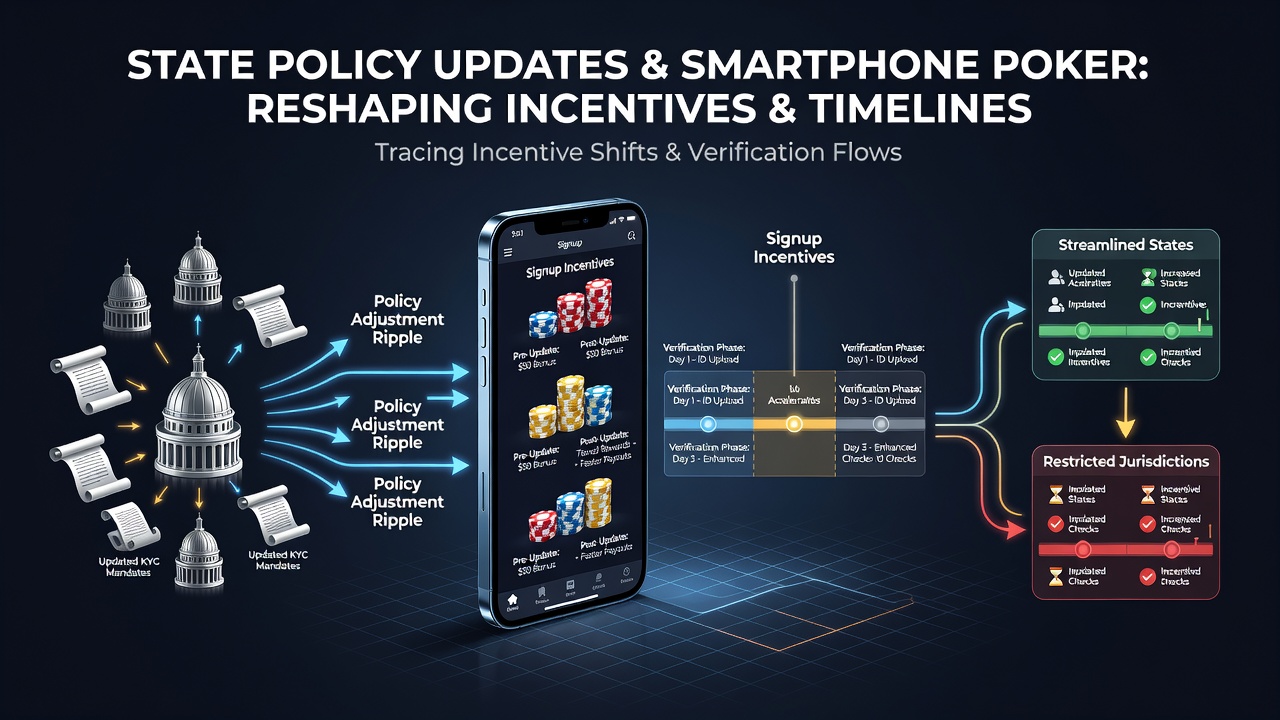
Tracing how state policy updates reshape signup incentives for smartphone poker variants alongside verification timelines
State legislatures and gaming commissions across multiple jurisdictions have rolled out policy revisions since early 2026 that directly alter deposit match structures and free-to-play credit systems for smartphone poker applications, while simultaneously adjusting identity verification windows that determine when those incentives become available to new accounts.
Data compiled by regional oversight agencies shows that verification completion periods shortened from an average of 72 hours to under 48 hours in several markets following the adoption of automated document scanning mandates, yet signup bonus eligibility now hinges on successful real-time ID checks rather than post-deposit confirmations in states that enacted these measures during the summer legislative sessions.
August 2026 Regulatory Adjustments Across Key Jurisdictions
By August 2026, at least four states had synchronized their digital gaming statutes to require multi-factor biometric authentication for all mobile poker registrations, a shift that operators report has compressed the window between account creation and bonus activation from several days down to same-day processing in compliant apps. Those who've tracked these timelines note that operators responded by front-loading smaller instant incentives like limited-time tournament tickets while reserving larger deposit matches for accounts that clear verification within the new 24-hour standard.
The Nevada Gaming Control Board published updated compliance guidelines in mid-August that tie progressive jackpot contributions from poker variants to verified player status, meaning signup incentives now scale according to how quickly users complete address and identity confirmation steps through state-approved third-party services.
Verification Timelines and Their Direct Effect on Bonus Deployment
Observers tracking operator dashboards indicate that states enforcing 12-hour verification caps have seen a measurable uptick in instant-play poker variants offering tiered reload credits, whereas jurisdictions maintaining longer manual review processes continue to structure welcome packages around delayed unlock mechanisms that activate only after full compliance clearance. Research from gaming analytics firms reveals that apps using facial recognition paired with government ID uploads achieved 85 percent same-day verification rates in August 2026, allowing operators to release 100 percent deposit match offers immediately rather than staging them across multiple days.
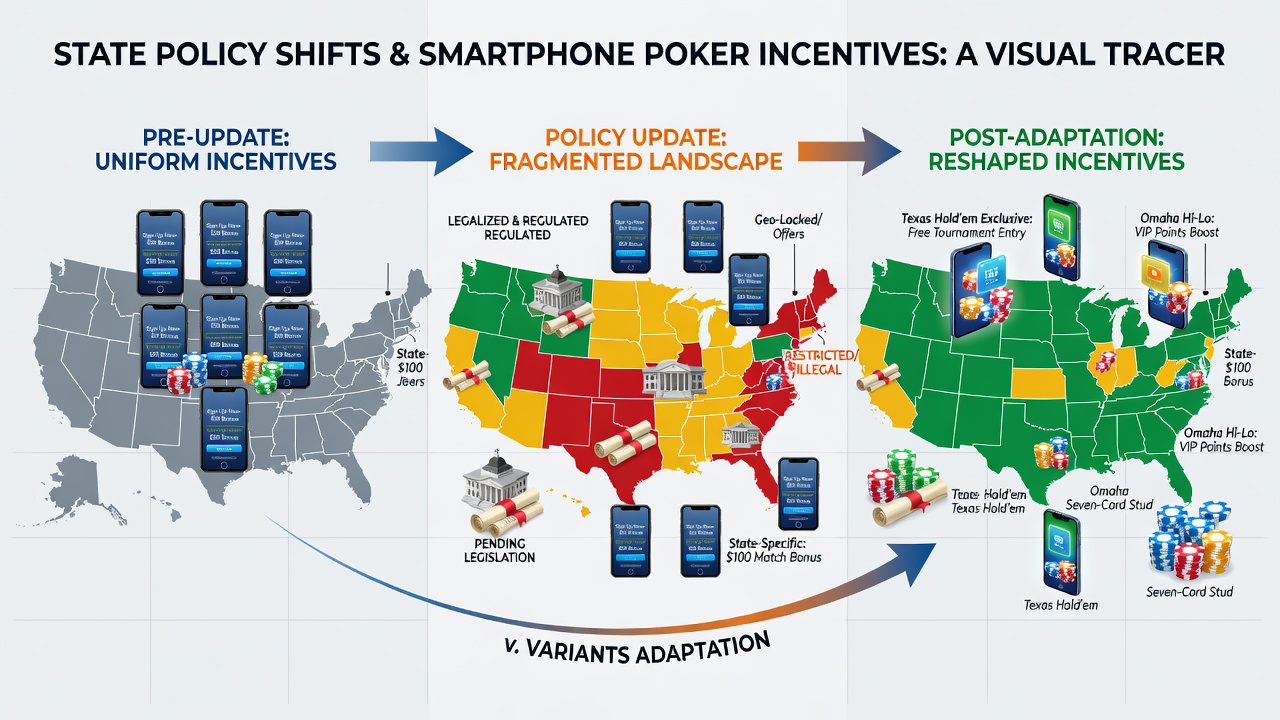
One documented case involved a major operator adjusting its smartphone poker lobby in a Midwestern market after the state gaming commission mandated that all new accounts undergo address verification before any monetary incentive could post, resulting in the replacement of traditional welcome bonuses with time-limited free tournament entries that require no deposit until verification succeeds.
State-by-State Variations in Signup Incentive Structures
Policy updates in Pennsylvania extended the required cooling-off period between account approval and bonus claim to 36 hours when verification relies on manual review, prompting several platforms to introduce non-cash incentives such as leaderboard points for poker variants that accumulate during the waiting interval. In contrast, Michigan's updated digital gaming rules effective August 2026 permitted instant bonus crediting once biometric verification clears, leading operators to expand smartphone-specific poker freerolls tied directly to the speed of ID confirmation.
Figures released by the Michigan Gaming Control Board show a 22 percent increase in verified mobile poker accounts during the first month after the August policy shift, with signup incentives now calibrated to reward users who complete verification within the initial six-hour window. Similar patterns emerged in New Jersey where the Division of Gaming Enforcement linked bonus pool contributions from poker traffic to verified player retention metrics, encouraging operators to prioritize rapid verification pathways for their smartphone offerings.
Operator Adaptations and Incentive Redesign
Operators have responded to these timelines by deploying region-specific poker variants that unlock progressive elements only after verification milestones are met, according to industry compliance reports. Data indicates that apps incorporating geofencing alongside identity checks reduced verification failures by 40 percent in August 2026, enabling more consistent delivery of signup incentives without regulatory delays.
Take one operator in a state that adopted automated cross-checks with motor vehicle records; the platform replaced standard deposit bonuses with verification-speed multipliers that increase poker credit values the faster users complete the process. Those monitoring these changes have documented parallel adjustments in Ontario's regulated market, where the Alcohol and Gaming Commission of Ontario requires verified status before any poker variant can award real-money prizes, influencing how North American operators structure cross-border mobile campaigns.
Conclusion
State policy updates implemented through August 2026 have created measurable linkages between verification completion speed and the availability plus scale of signup incentives across smartphone poker platforms, with data from multiple gaming control boards confirming that faster automated processes correlate with more immediate bonus deployment while extended manual reviews prompt operators to substitute non-monetary rewards during transition periods. These shifts continue to evolve as additional jurisdictions align their digital gaming frameworks with biometric and real-time verification standards.