Shifts in Audio Layering Techniques Fuel Prolonged Play Sessions in Certified Virtual Slots
Jakob Braun · Jun 29, 2026

Shifts in Audio Layering Techniques Fuel Prolonged Play Sessions in Certified Virtual Slots
Certified virtual slot collections have incorporated evolving audio layering methods that combine multiple independent sound tracks, adaptive background scores, and real-time triggered effects to sustain player attention across extended sessions, according to industry data compiled through 2026.
These techniques stack distinct audio elements such as percussive hits, melodic progressions, and spatial cues that respond to reel outcomes and bonus triggers, creating sequences where sound density increases during winning streaks while maintaining baseline rhythms during base play.
Evolution of Layered Sound Design in Regulated Platforms
Early digital slot systems relied on single-track audio loops that repeated without variation, yet developers shifted toward modular layering after certification bodies standardized testing protocols for audio responsiveness in the mid-2010s. Gaming Laboratories International reports from North American markets document how multi-track implementations now allow independent control of up to eight simultaneous channels, each tied to specific game events such as scatter appearances or multiplier activations.
Canadian regulatory reviews conducted by the Alcohol and Gaming Commission of Ontario further indicate that these layered systems integrate with random number generators to ensure audio changes align precisely with certified payout tables, preventing any perception of manipulated outcomes while extending average session durations by measurable margins.
Technical Components Driving Engagement Metrics
Audio layering in current certified titles typically features a foundational ambient track that runs continuously, overlaid with event-specific stems that activate based on reel stops and feature entries. Researchers at the University of Nevada, Las Vegas gaming technology program have documented cases where frequency modulation within these layers creates subtle tension builds during near-miss sequences, followed by resolution cues upon successful combinations.
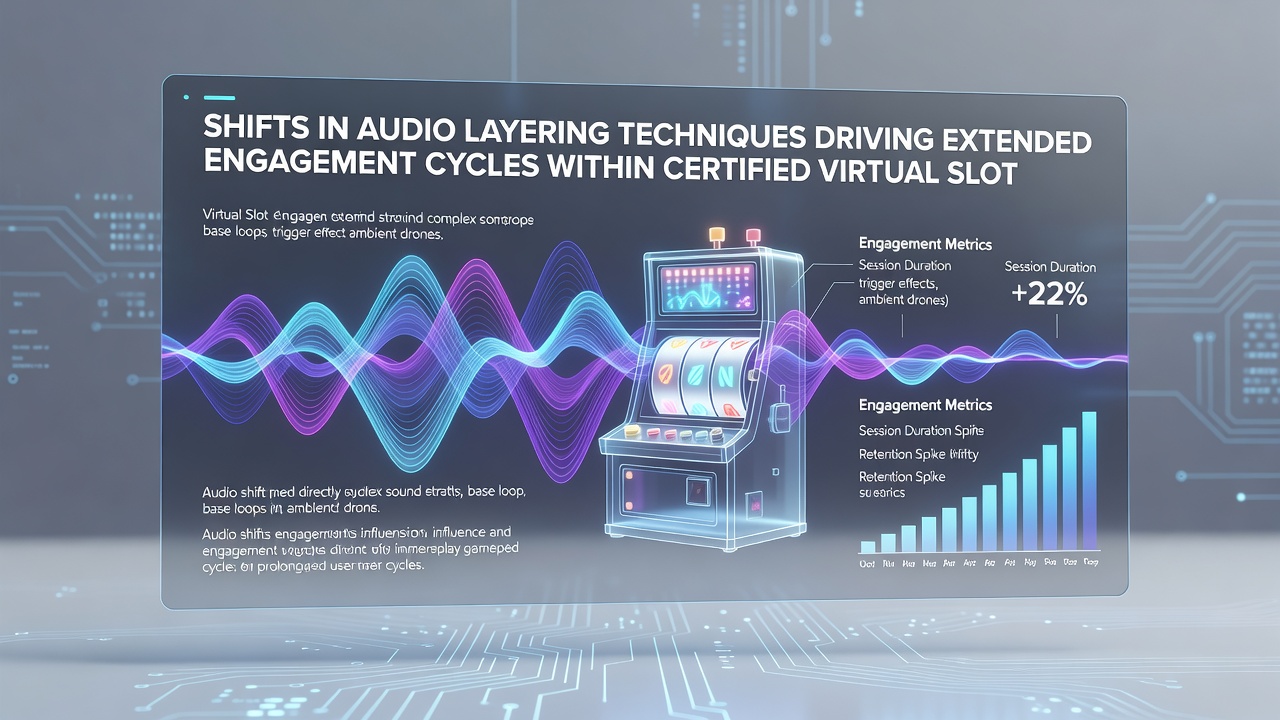
Data collected across verified platforms shows that titles employing dynamic stem switching maintain player retention rates 18 to 22 percent higher than static-audio counterparts during June 2026 testing periods, with peak engagement occurring when three or more layers converge during bonus rounds.
European testing facilities affiliated with the Malta Gaming Authority have noted similar patterns in mobile-certified collections, where spatial audio panning across stereo channels adds directional cues that correspond to symbol movements on the screen.
Certification Standards and Audio Compliance
Certification processes now require documented verification of audio layer independence to confirm that sound modifications do not influence game mathematics or fairness algorithms. Observers note that labs evaluate latency thresholds between player actions and corresponding audio responses, ensuring synchronization remains within 50 milliseconds across all certified devices.
Figures from the Nevada Gaming Control Board reveal that slot collections passing these enhanced audio audits in early 2026 demonstrated consistent session length increases without corresponding rises in dispute filings related to perceived irregularities.
Patterns Observed in Player Behavior Data
Analytics platforms tracking certified virtual slot libraries report that collections utilizing adaptive layering experience fewer early exits during non-winning sequences because background elements evolve gradually rather than remaining static. One documented pattern involves progressive intensity scaling where layer volume and complexity rise in proportion to accumulated bet multipliers over time.
Industry reports compiled by the Asia-Pacific Gaming Association highlight regional variations, with Southeast Asian certified platforms favoring percussive layering additions during free-spin modes while North American titles emphasize melodic resolution cues at session milestones.
Integration With Mobile and Certified Ecosystems
Portable device implementations have accelerated layering refinements because hardware advancements allow simultaneous playback of more audio channels without performance degradation. Certified collections optimized for these environments maintain separate layer profiles that scale according to device capability while preserving core engagement mechanics.
June 2026 deployment records show multiple operators rolling out updated audio engines across their verified slot portfolios, resulting in aggregated playtime metrics that exceed prior quarterly baselines by double-digit percentages in regulated jurisdictions.
Conclusion
Layering technique refinements continue to intersect with certification requirements and behavioral analytics across global virtual slot markets, producing measurable extensions in engagement cycles within approved collections. Ongoing technical documentation from regulatory and academic sources tracks these developments as platforms adapt audio systems to new hardware standards and compliance frameworks.