Player Migration Trends Between High-Volatility Slots and Live Table Options Driven by Deposit Speed Variations in Regulated Digital Spaces
Hugo Frank · Jun 8, 2026
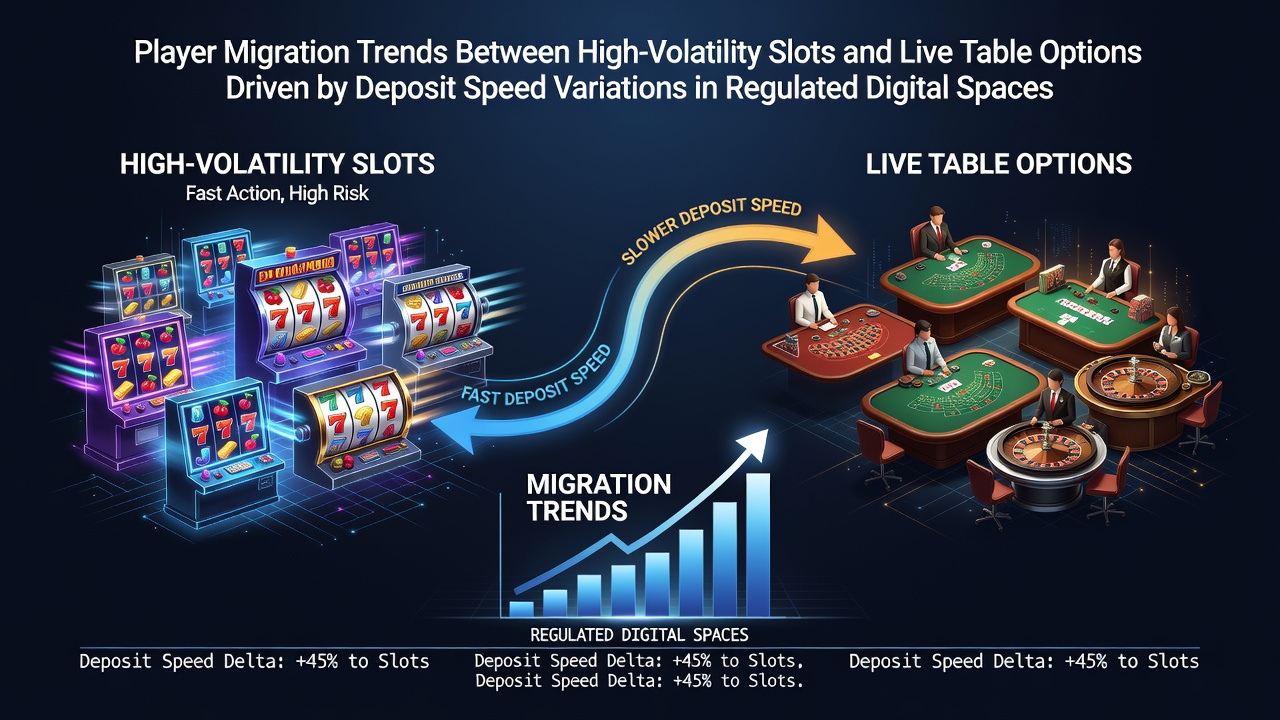
Player Migration Trends Between High-Volatility Slots and Live Table Options Driven by Deposit Speed Variations in Regulated Digital Spaces
Regulated digital gaming platforms have documented notable shifts in player preferences during the first half of 2026, particularly where deposit processing times influence movement between high-volatility slot titles and live dealer table environments. Data collected across multiple jurisdictions reveals that faster transaction protocols correlate with increased engagement in live table formats, while slower deposit speeds tend to sustain activity within slot libraries.
Deposit Speed as a Migration Driver
Transaction processing times vary significantly across regulated operators, with some platforms completing deposits in under 30 seconds through integrated banking solutions and others requiring several minutes due to verification layers. Researchers tracking user behavior note that these differences prompt measurable adjustments in game selection, especially among players who maintain consistent session funding habits. Platforms operating under frameworks established by the New Jersey Division of Gaming Enforcement have shown particularly clear patterns in this regard, where deposit speed data aligns closely with session duration metrics across game categories.
High-volatility slots often attract users seeking extended play cycles with infrequent but substantial returns, yet the appeal diminishes when funding interruptions occur. In contrast, live table options require steady bankroll management that benefits directly from rapid deposit capabilities, allowing participants to adjust stakes without leaving the interface. Observers tracking these dynamics through June 2026 report that operators implementing instant verification protocols experience higher cross-category movement within single sessions.
Characteristics of High-Volatility Slot Engagement
High-volatility slots feature mathematical models that produce larger payout intervals alongside elevated potential returns, a structure that appeals to players comfortable with extended dry spells. Activity logs from regulated environments indicate these games maintain strong retention when deposit speeds remain moderate, since users typically preload balances for multiple spins. However, when processing times exceed two minutes, session abandonment rates rise noticeably before players reach bonus rounds or feature triggers.
Industry reports compiled by the American Gaming Association highlight that slot-focused users in markets with standardized deposit requirements demonstrate greater stability in their game choices compared to regions where transaction speeds fluctuate more widely. This stability stems from predictable funding access that matches the slower pace of high-volatility mechanics.
Live Table Dynamics and Funding Requirements
Live dealer tables operate on real-time interaction cycles that reward immediate access to additional funds during ongoing hands or rounds. Roulette, blackjack, and baccarat sessions frequently involve mid-play adjustments, creating natural pressure for seamless deposit integration. Data gathered from platforms in Atlantic City-regulated spaces shows that operators with sub-minute deposit confirmations retain higher percentages of live table participants who begin sessions with modest initial balances.
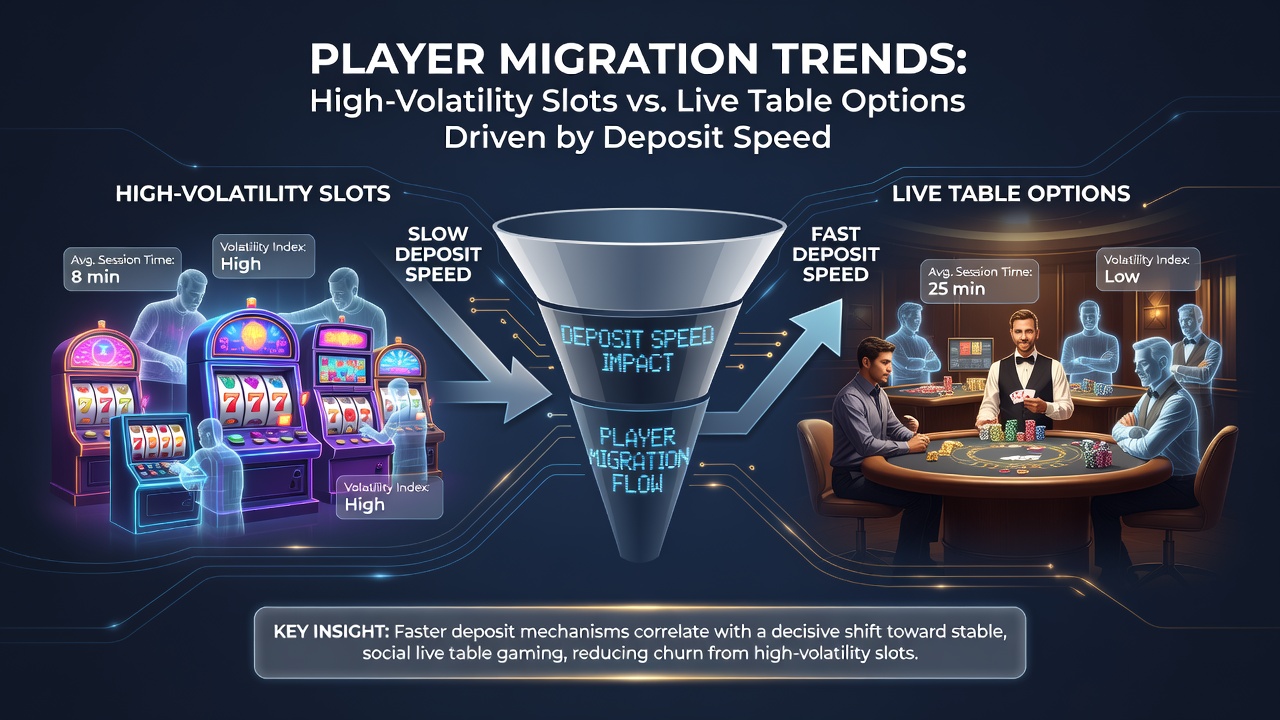
European markets governed by the Malta Gaming Authority have produced similar findings through aggregated operator submissions, where live table volume increases correspond with adoption of faster payment rails. The connection appears strongest among mobile users who transition between game types within the same login period, a behavior facilitated when deposit friction remains minimal.
Observed Patterns Through Mid-2026
Analysis of user flow data from verified platforms operating between January and June 2026 reveals consistent directional movement: players encountering deposit delays above 90 seconds show elevated return rates to high-volatility slots, whereas those accessing funds within 45 seconds demonstrate broader exploration of live table catalogs. These patterns hold across multiple regulatory frameworks without evidence of jurisdiction-specific exceptions.
Academic studies from institutions monitoring digital gambling behavior further support the role of transaction velocity in shaping category preferences. When deposit infrastructure improves, migration toward live options accelerates most noticeably among users aged 25 to 40 who maintain multiple concurrent sessions. Slower environments preserve slot dominance because players avoid the risk of missing table action during funding windows.
Regulatory Context and Platform Adaptations
Regulated digital spaces impose strict standards on payment processing that directly affect how quickly operators can respond to user funding requests. Jurisdictions emphasizing real-time monitoring of transaction integrity often require additional verification steps that extend deposit windows, creating conditions where slot retention strengthens relative to live table activity. Platforms that invest in compliant acceleration technologies, such as automated identity checks paired with banking partnerships, report more balanced distribution across game types.
Figures released by the Nevada Gaming Control Board through early 2026 underscore that operators meeting both security and speed benchmarks experience less pronounced category concentration. This balance emerges because players retain flexibility to move between high-volatility experiences and interactive table formats without encountering procedural barriers.
Conclusion
Deposit speed variations continue to shape player movement between high-volatility slots and live table options within regulated digital environments, with faster processing supporting broader exploration and slower times reinforcing slot-focused patterns. Data through June 2026 confirms these relationships across diverse regulatory structures, highlighting transaction infrastructure as a central factor in observed migration trends.