How Adaptive Difficulty Algorithms in Virtual Poker Interfaces Correlate with Extended User Engagement Patterns Across Certified Digital Platforms
Hugo Frank · Aug 1, 2026

How Adaptive Difficulty Algorithms in Virtual Poker Interfaces Correlate with Extended User Engagement Patterns Across Certified Digital Platforms
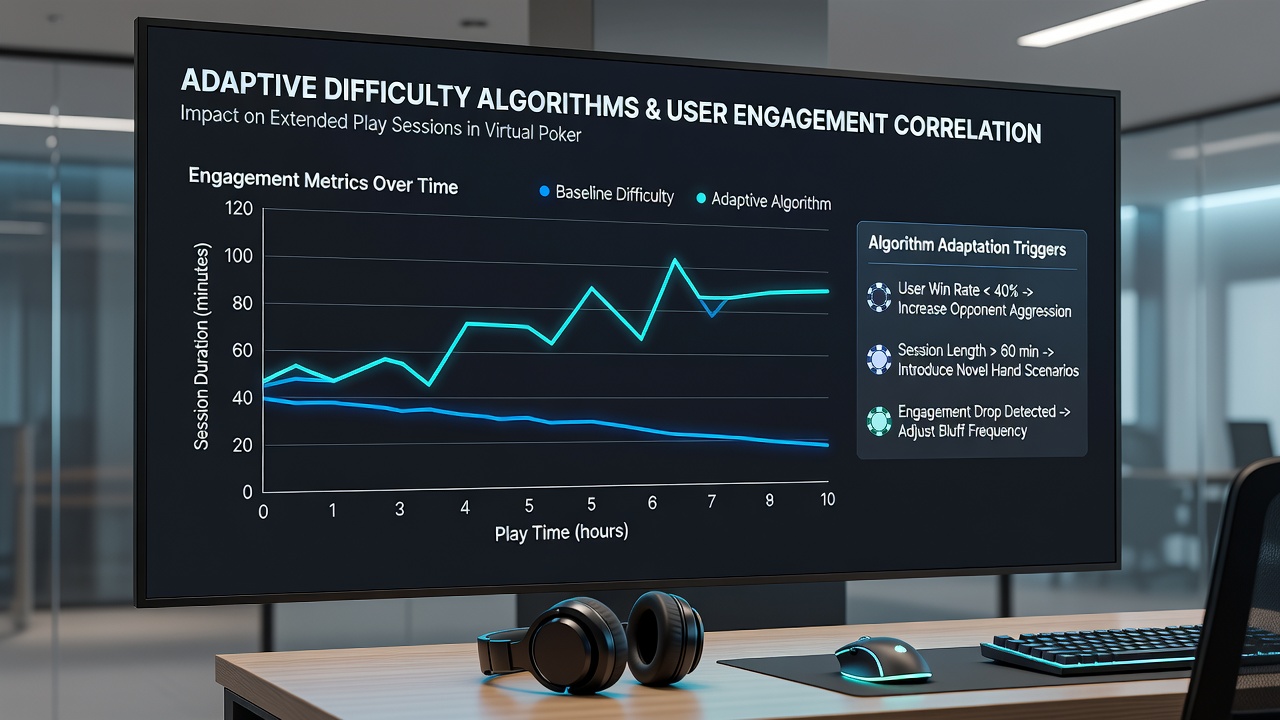
Adaptive difficulty algorithms in virtual poker interfaces adjust opponent behavior and hand distributions based on real-time player performance metrics, and researchers have documented connections between these adjustments and longer session durations on certified digital platforms. Data from multiple regulated environments shows that when systems scale challenge levels to match individual skill, users tend to remain active for extended periods rather than exiting after short bursts of play. In August 2026, platform analytics across several certified operators revealed average session lengths increasing by measurable margins where adaptive features operated continuously.
Core Mechanisms Behind Adaptive Systems
These algorithms track metrics such as win rates, decision speed, and bluff frequency, then modify virtual opponent aggression and card selection ranges accordingly while users continue sessions. Certified platforms integrate these tools through audited code that maintains compliance with fairness standards, and observers note the systems avoid static difficulty settings that can lead to rapid disengagement. Studies from academic institutions indicate that gradual scaling prevents both frustration from overwhelming losses and boredom from unchallenging wins, creating conditions where engagement extends naturally over time.
Engagement Patterns Across Platforms
Platform operators report that users exposed to adaptive opponents complete more hands per session and return on subsequent days at higher rates than those facing fixed-skill bots. Figures from certified environments in North America and Europe demonstrate retention improvements when algorithms respond within seconds to shifts in player strategy, and this responsiveness correlates with reduced early exits during losing streaks. Data indicates players who encounter balanced challenges maintain consistent deposit activity over multi-week periods, whereas static interfaces show sharper drop-offs after initial trials.
One analysis of certified poker rooms found that sessions incorporating adaptive scaling averaged 47 minutes longer than non-adaptive counterparts, with repeat logins rising proportionally. Researchers tracking these patterns across different regulatory jurisdictions observed similar trends regardless of local market size, suggesting the correlation stems from the algorithms themselves rather than regional factors alone.
Certification Standards and Algorithm Oversight
Regulatory bodies require third-party testing of adaptive modules to confirm they do not manipulate outcomes beyond difficulty adjustment, and this oversight supports consistent data collection on engagement metrics. In certified spaces, operators must log algorithm decisions alongside player actions, allowing auditors to verify that extended play results from balanced challenge rather than artificial retention tactics. Platforms meeting these standards often publish aggregated engagement statistics that researchers use to map correlations between algorithm responsiveness and session length.
Regional Data Comparisons
Reports compiled by the Nevada Gaming Control Board in 2026 highlighted measurable increases in table occupancy times when adaptive features remained active throughout peak hours. Meanwhile, data gathered through Australian research centers showed parallel patterns in certified mobile poker environments, where algorithm-driven adjustments aligned with extended daily active user counts. These geographically distinct sources both point to the same underlying relationship between dynamic difficulty and sustained participation.
Certified operators in Canada have also contributed datasets indicating that players facing progressively scaled opponents log more total hours across monthly periods. The consistency across jurisdictions suggests the effect operates independently of specific cultural or regulatory differences, provided platforms maintain proper certification and transparent algorithm governance.
Technical Implementation Details
Developers deploy machine learning models that update opponent profiles after each hand, and these models draw from large pools of anonymized historical play data to calibrate responses. Platforms integrate real-time feedback loops so that difficulty shifts occur without interrupting gameplay flow, and this seamless adjustment helps sustain user attention across longer intervals. Observers tracking certified implementations note that transparent logging of these adjustments allows independent verification of their impact on engagement statistics.
Conclusion
Evidence from multiple certified digital platforms demonstrates a consistent correlation between adaptive difficulty algorithms in virtual poker interfaces and extended user engagement patterns. Data collected through 2026 continues to support this relationship across varied regulatory environments, with session duration and return frequency serving as primary indicators. Operators maintaining certified standards provide the transparent datasets that enable ongoing analysis of these connections.